The Book of Forgetting
How Amnésias became Candi Press, volume two — and why a family writes.
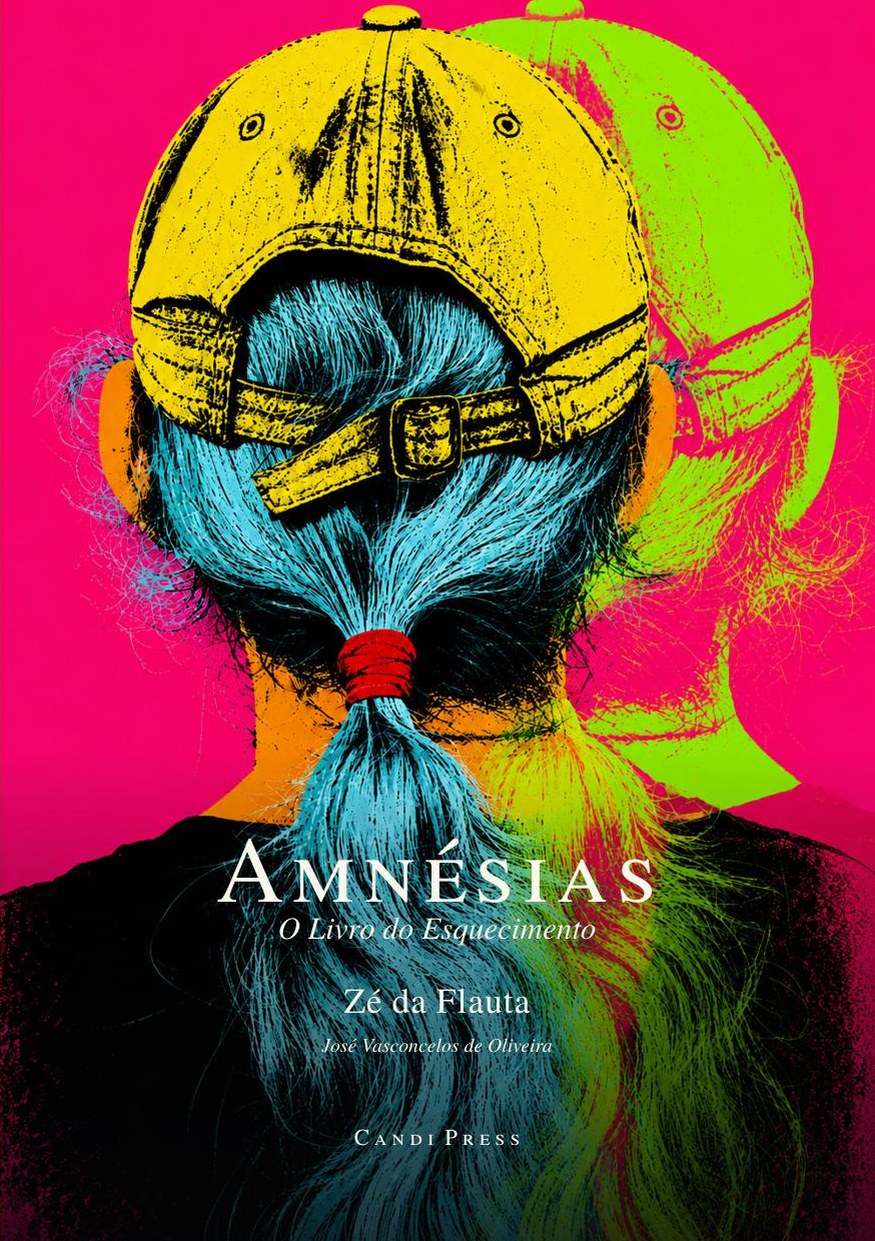
The first book of the collection came to me as fifty-one photographs of a late author’s manuscript. The second came whole — a clean file of a living man’s laughter about the very thing we all lose.
Its author is Zé da Flauta — a pen name; the man behind it is José Vasconcelos de Oliveira. And here is what I did not foresee when I opened the imprint: he is the son of Marilda Vasconcelos de Oliveira, whose verbless tales are Candi Press, volume one. A mother and her son, each with a book, arriving at the same small press in the same season. You do not plan a thing like that. You only recognize it when it comes, and try to be worthy of it.
What the book is
Amnésias — O Livro do Esquecimento — is a book of crônicas about memory and forgetting, written in the key of humour. That is a harder key than it sounds. To be funny about the keys that vanish, the names that slip, the years that pass, you must already have made peace with the losing; the laughter is the peace. More than a thousand short paragraphs, each a small stay against oblivion — and there is the joke and the tenderness at once: a book about forgetting, made in the one form built to be kept.
The body we gave it
Where Marilda’s book had to be rescued, Zé’s had to be dressed. It arrived as a Word document and asked only for the right clothes: the A5 literary trim of the collection, Palatino on cream, generous margins, the paragraphs given room to breathe rather than glued edge to edge.
One quiet lesson came from the cover. Amazon’s form matches the name on the book to the name on the account, and a pen name alone will not pass. So the front now carries both — Zé da Flauta, and beneath it, plainly, José Vasconcelos de Oliveira. The mask and the face, kept together. His brother-in-law, Gilson de Almeida, read the proofs for errors and is named for it on the last page, as a good reader should be.
Then the second volume went out into the world beside the first, and a family that had always made things quietly became, without any fuss, a family in print.
That is what a small press is for. Not only to rescue a book from photographs, but to take a living writer’s laughter about what we lose and give it the one body that does not forget.